When Does Aerogel Insulation Make Sense?
When Does Aerogel Insulation Make Sense?
Aerogel blankets are appearing more and more often in industrial insulation. Very low thermal conductivity, thin build-up and water repellency are real advantages, but aerogel is not the right choice for every application. This article looks at when aerogel stands out, where conventional materials are sufficient, and what to consider when choosing.
What is aerogel?
Aerogel is a nanoporous silica structure whose volume is mostly air. In industrial use it typically comes as flexible blankets in which the aerogel is embedded in a fibre carrier. Because the nanopores restrict the movement of gas molecules, heat transfer is very low: at room temperature, aerogel blankets typically have a thermal conductivity of 0.015–0.023 W/m·K, roughly half that of conventional materials such as mineral wool. Products are made for different temperature ranges, from cryogenic grades up to about 650 °C.
Where aerogel stands out
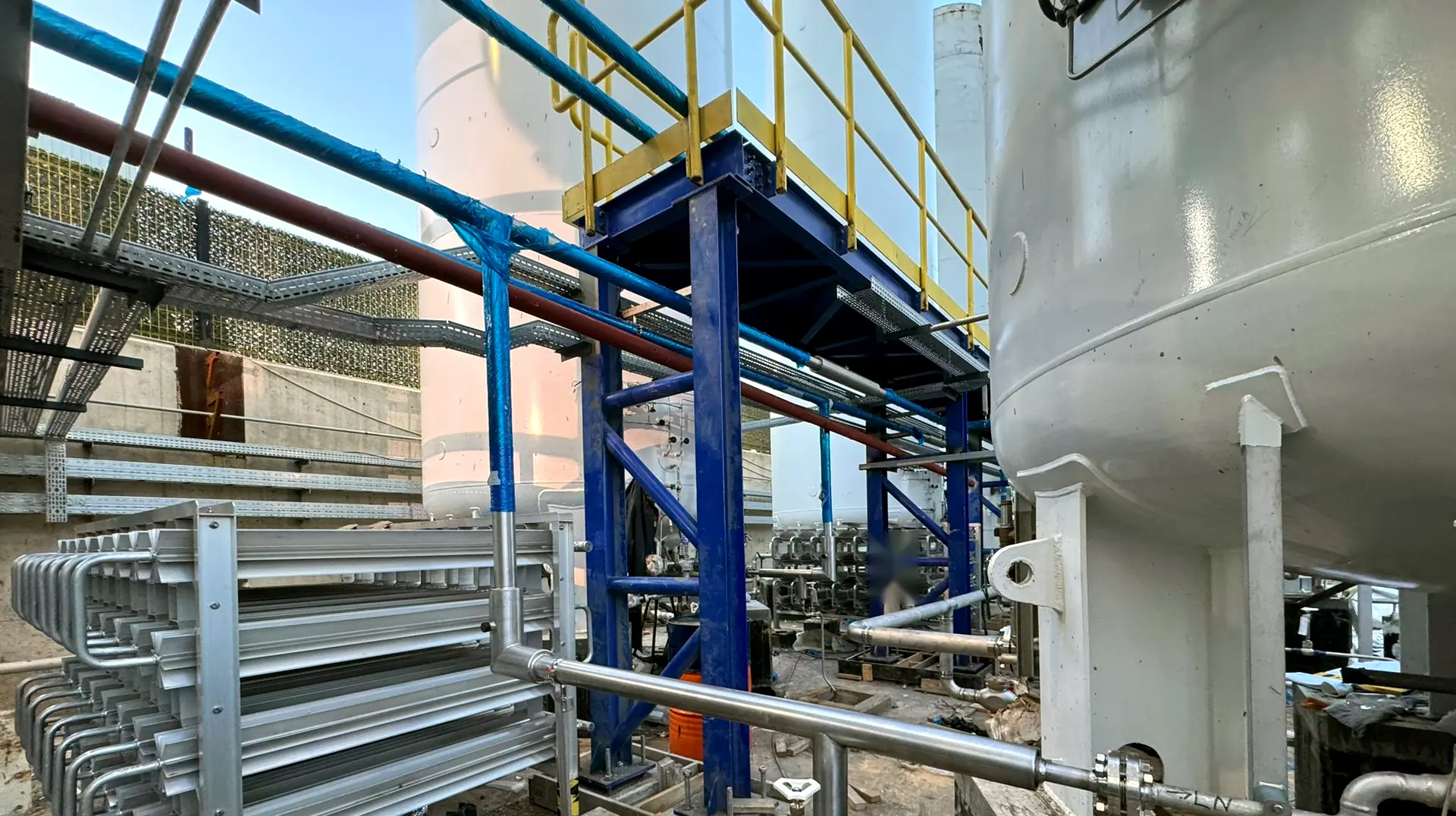
- Tight spaces: It achieves the same thermal performance with less thickness, solving space problems on congested pipe racks, modular skids and retrofit projects.
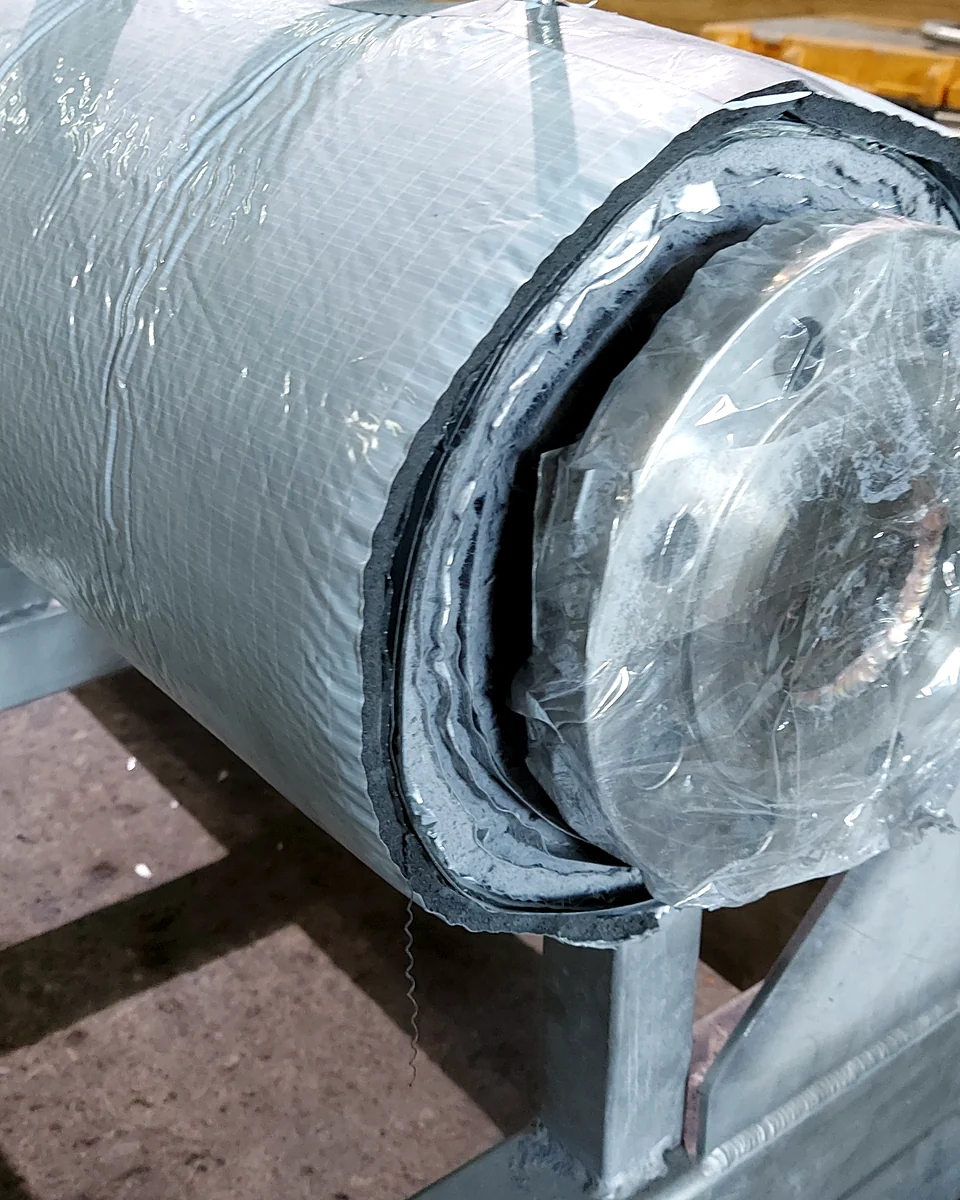
- Cryogenic lines: On LN2, LO2, LAr, LCO2 and LNG lines it offers a thin, flexible solution together with a suitable vapour barrier system, and makes complex geometries such as valves and elbows easier to insulate.
- Lines at risk of CUI: Its hydrophobic structure repels liquid water and reduces the risk of water collecting inside the insulation. Combined with the right surface coating and cladding details, it is an important measure against corrosion under insulation.
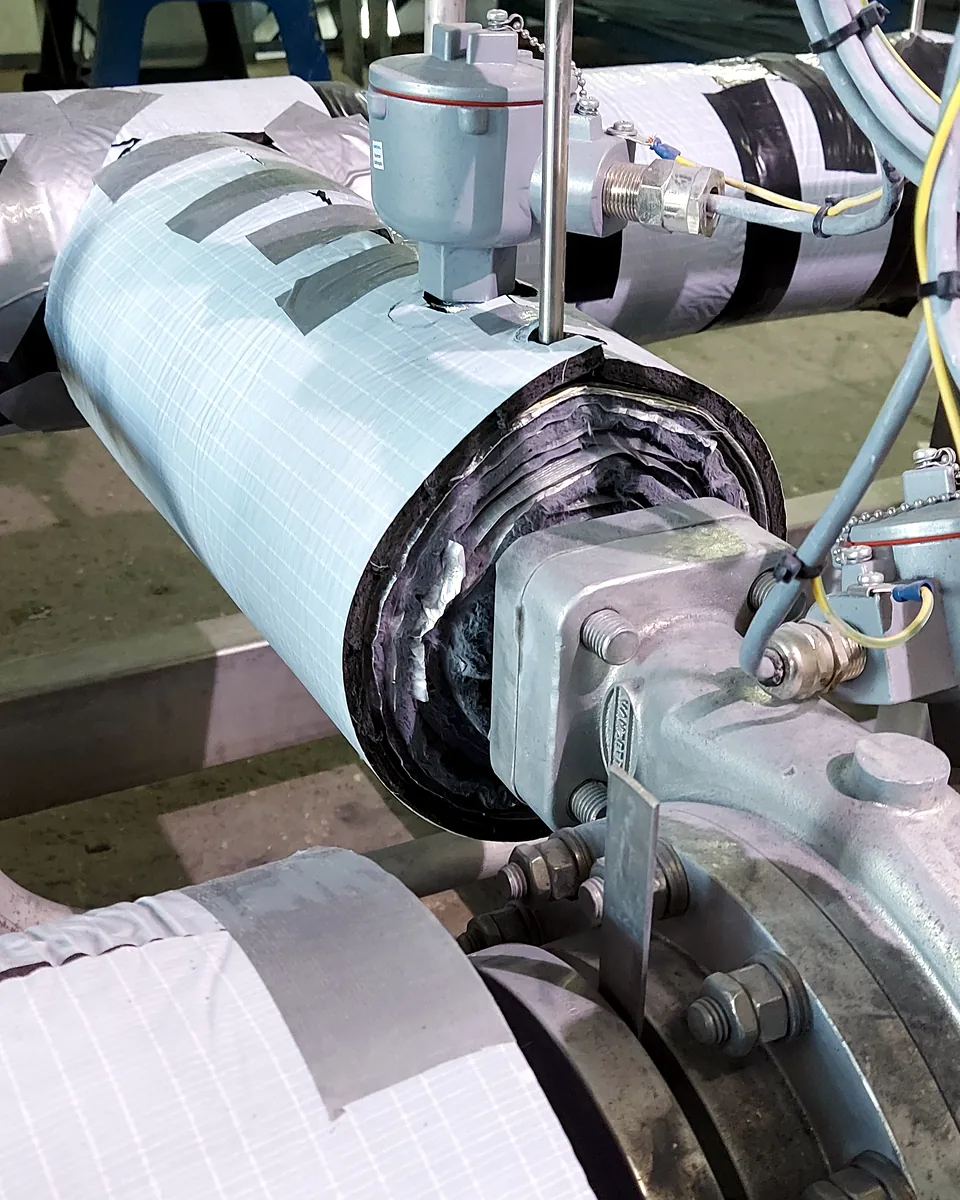
- High-temperature equipment: On steam lines, hot process lines and equipment surfaces it helps bring surface temperatures down to safe levels with a thin build-up.
- Where weight matters: Less thickness means less cladding and lower loads on supports.
When conventional materials are enough
On large-diameter, long lines with no space constraints, or in standard medium-temperature applications, materials such as mineral wool, cellular glass, elastomeric foam or calcium silicate are often the better technical and economic choice. Aerogel costs more per square metre than conventional materials, so the decision should be based on the whole system, not on thermal conductivity alone.
In some projects hybrid solutions give the best result: for example aerogel in the layer next to a hot surface with a more economical material on the outside, or conventional material on straight runs with aerogel at valves and tight spots.
What to consider when choosing
- Operating and design temperature range, and whether the service is cyclic
- Available space and target insulation thickness
- Condensation control and vapour barrier needs on cold lines
- CUI risk and chloride content on stainless steel surfaces
- Target surface temperature for personnel protection
- Mechanical strength, vibration and the cladding system
- Maintenance frequency and the need for removable solutions
Installation points to watch
Aerogel blankets can release dust during cutting and installation, so appropriate personal protective equipment and a tidy work area are needed. Performance depends directly on the correct number of layers, overlap pattern, fixing and cladding details. In cryogenic applications the continuity of the vapour barrier is critical: a single gap can lead to icing and loss of performance over time.
The Cryonos approach
At Cryonos we evaluate aerogel and conventional materials together to design and install the right system for each line. For applications ranging from cryogenic filling lines and process skids to hot lines and valve jackets, see our Insulation and Engineering page; for material families and comparisons, see Insulation Materials. Where very low heat gain is required on cryogenic transfer lines, vacuum-jacketed pipes are another option worth considering. You may also find our article CUI: early warning signs and inspection useful.
Aerogel, conventional material or a hybrid solution – which suits your project? Contact us and we will assess it together based on your line data.